
Somerville Wood Flooring helps owners replace carpet with hardwood in Somerville, MA, serving surrounding cities including Cambridge, Charlestown, Medford, Everett, Back Bay. In 20+ years of this work, the most common surprise has been a good one: pull up the wall-to-wall carpet in an older house and there is very often a red oak strip floor underneath, covered in staples but otherwise waiting to be refinished.
Replacing carpet with hardwood can mean two different jobs. One is uncovering and refinishing the original floor. The other is removing the carpet and installing new solid or engineered hardwood where nothing worth saving survives. We look under the carpet before quoting, so you know which job you are paying for.
What Is Under the Carpet
Original Oak and Pine
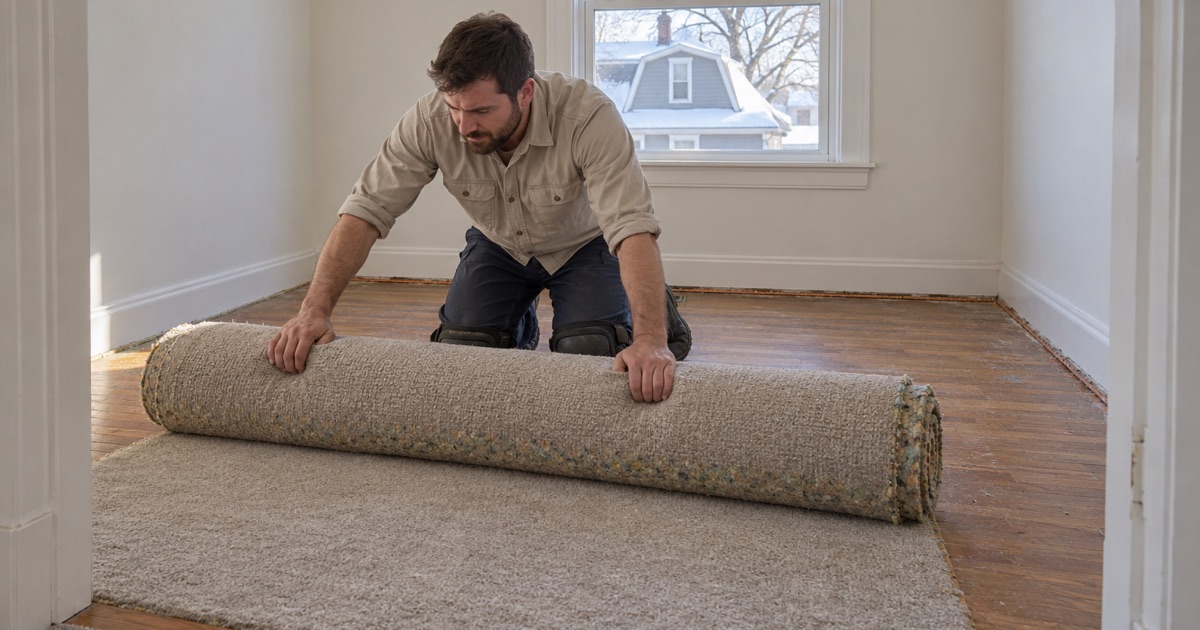
Many houses here had their oak and pine floors carpeted over in the decades after they were built. Under the carpet pad, those floors are often in better shape than exposed floors in the same house, because they have been protected from traffic and sunlight. Red oak strip flooring, white oak, maple and eastern white pine all turn up.
Once the carpet is gone, the floor usually needs a full sanding to remove adhesive residue, staining and the pale rug shadow along the walls, then a fresh finish. That is typically the least expensive route from carpet to hardwood.
Plywood or Particleboard Subfloor
Some rooms were never finished with wood and have only a plywood or particleboard subfloor under the carpet. Those rooms need new flooring. We check that the subfloor is flat and sound and fix it where needed before installing solid or engineered hardwood. Particleboard swells and crumbles where it has ever been wet, so it is usually replaced or covered with plywood rather than nailed into directly.
Old Tile, Linoleum and Black Mastic
Carpet was sometimes laid over earlier flooring, including resilient floor tile and sheet linoleum glued down with black mastic. Older tile and mastic can contain asbestos. We identify them before any scraping or sanding nearby, and leave their removal to the right trade under 310 CMR 7.15.
Removing Carpet the Right Way
Carpet, Pad and Tack Strip
We cut and roll the carpet, remove the carpet pad, and pry up the tack strip nailed around the perimeter of each room, taking care not to split the floorboards beneath. The thousands of pad staples are pulled one by one, because a staple left in the floor tears sanding paper and gouges the wood.
Filling Holes and Gaps
Tack strip leaves a line of nail holes along every wall. We fill them with a filler matched to the wood after sanding, so they disappear in the finished floor. Gaps between boards, if they stay open year-round, are filled with thin strips of matching wood. Seasonal winter gaps that close again in summer are left alone, because filler in a moving joint cracks out within a year.
Lead Paint and Older Trim
Carpet removal often disturbs painted baseboards and shoe molding. In homes built before 1978, we check the build year and painted surfaces before work starts, because Massachusetts runs its own lead-safe renovation rules on top of the federal EPA RRP Rule. Painted shoe molding is often removed and replaced rather than sanded, which keeps paint dust out of the room entirely.
Carpet on Stairs and Landings
Stair carpet hides more staples and tack strip than any room, and the treads under it may be finish-grade oak or rough boards meant only to be covered. We uncover a step before quoting, then either refinish the treads, risers and nosing or cap them with new stair treads. Stairs are priced tread by tread rather than by the square foot, because each step is individual hand work.
Refinishing or Installing
Refinishing the Floor Underneath
Where the original floor is sound, we sand it to bare wood through a full grit sequence, repair or replace damaged boards with weave-in repairs, and finish it with a waterborne polyurethane that fits the Massachusetts VOC limits for wood coatings. Stain and sheen samples go on your own floor first so you choose the color in your own light.
Installing New Hardwood
Where new flooring is needed, we choose between solid and engineered hardwood based on the subfloor, the room and any building rules, acclimate the material, and install it over a flat, dry subfloor. We match new boards to adjoining oak floors where the new floor meets an existing one.
Matching Rooms That Were Never Carpeted
Often only some rooms were carpeted, and the hall or dining room was left as wood. We sand and finish newly uncovered floors to sit beside the existing ones, or refinish the whole level together so every room reads as one floor.
Carpet Removal in Condos and Rentals
Condos and Sound Rules
Many condo associations require carpet or an approved sound-reducing underlayment under hard floors in upper units. We read the association’s documents before you commit, because swapping carpet for hardwood without meeting those rules can lead to a complaint and a costly redo.
Rentals Between Tenants
Landlords often replace worn carpet with hardwood during a turnover. Refinished oak is far easier to clean and lasts through many more tenancies than carpet. We schedule the work to fit between one lease and the next, with an itemized invoice that records the work for your files. In a two- or three-family, we can do one unit while the others stay occupied, with doors and returns sealed so dust does not travel to the neighbors.
- 20+ Years With Wood Floors
- Written Itemized Estimates
- Free Estimates