Water Damage From the Unit Upstairs
In a stacked two-family or triple-decker, a leaking toilet or dishwasher above often shows up as water stains and cupping in the ceiling and floor below. We trace where the water traveled, dry and read the boards with a moisture meter, and document every room for the adjuster. Sanding before the wood has dried just brings the damage back.
Cupping and Buckling After a Leak
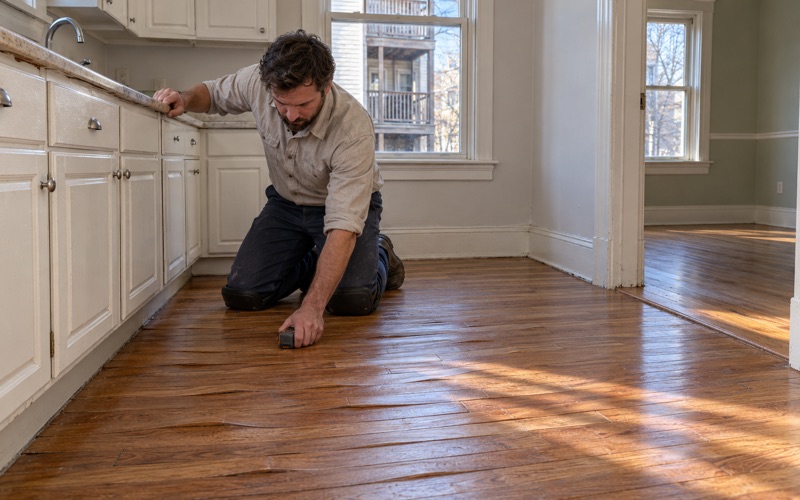
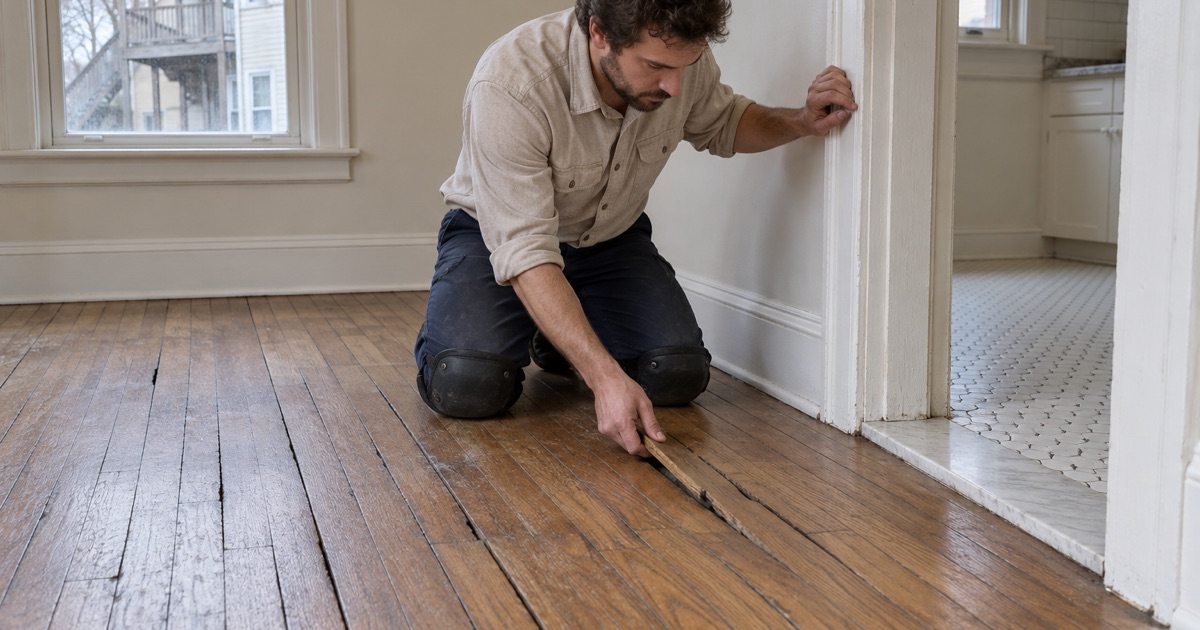
Cupping is the edges of each board rising above the center as the underside takes on moisture; buckling is the floor lifting off the subfloor entirely. Radiator valves, burst pipes and appliance supply lines cause both. We find and fix the source, let the floor dry to a stable reading, then decide what can be flattened by sanding and what has to be replaced.
Winter Gaps Between Boards
When steam or hot-water heat comes on, indoor air dries out and boards shrink, opening winter gaps that close again in summer. That seasonal board gapping is normal and should not be filled with rigid putty, which cracks out by spring. Where gaps stay open year-round, we look at the subfloor and fasteners rather than the season.
Squeaky Floorboards and Nail Pops
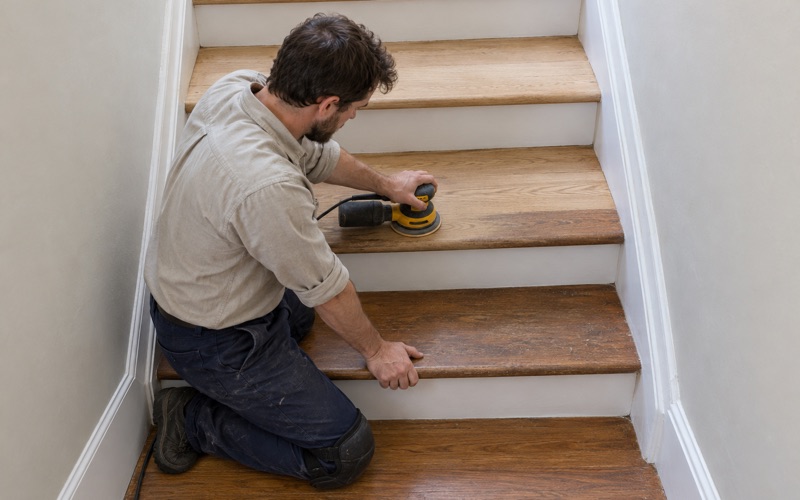
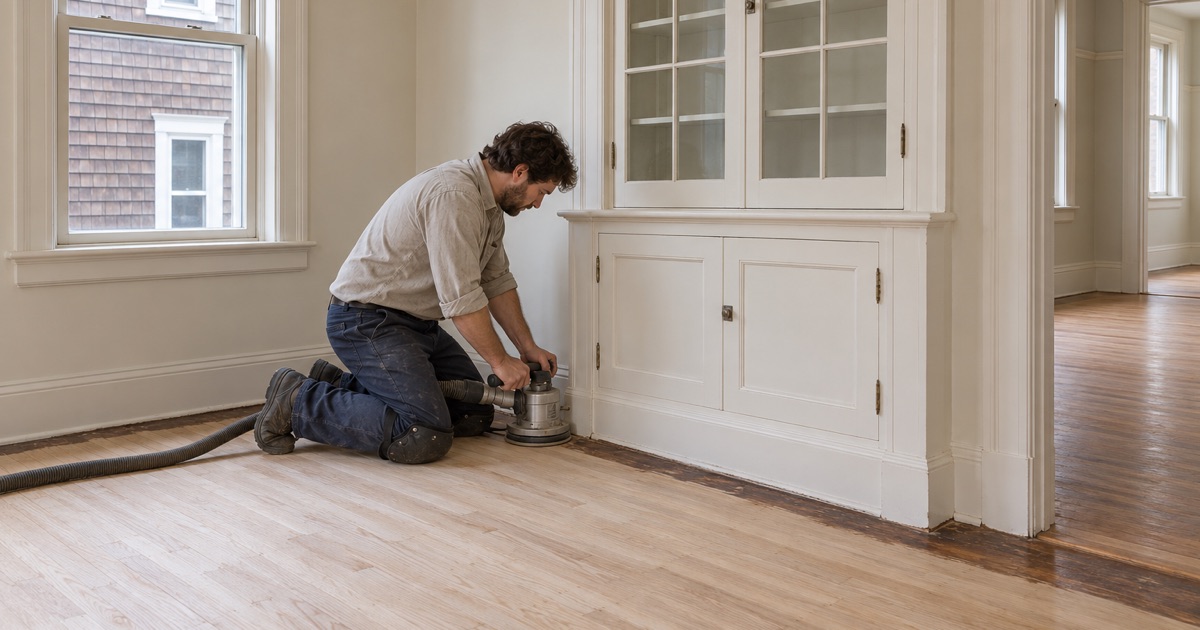
Squeaky floorboards usually mean a board rubbing against its neighbor or a loose fastener over a joist. Old face nails and cut nails also work up over time and catch socks and sanding paper alike. We reset or replace the fasteners, add flooring cleats or screws from below where we can reach, and set every nail head before sanding.
Pet Urine Stains in the Subfloor
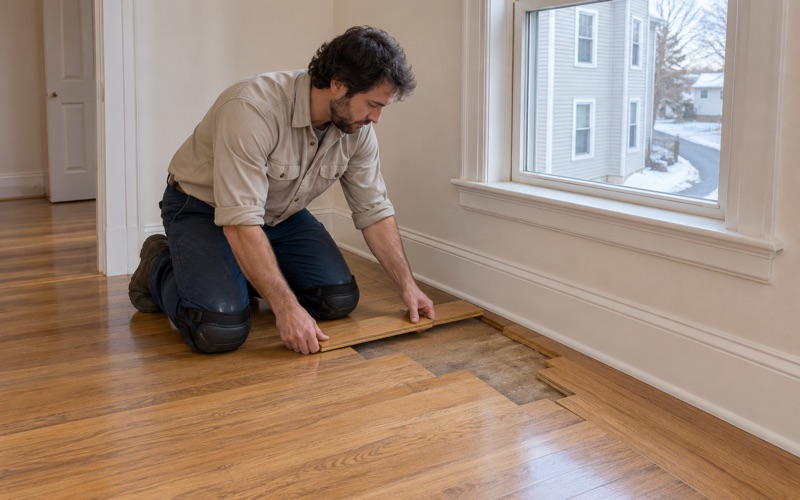
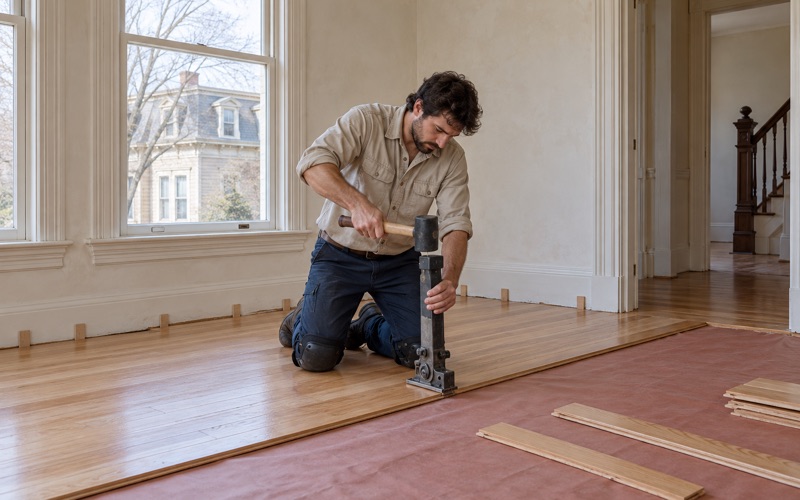
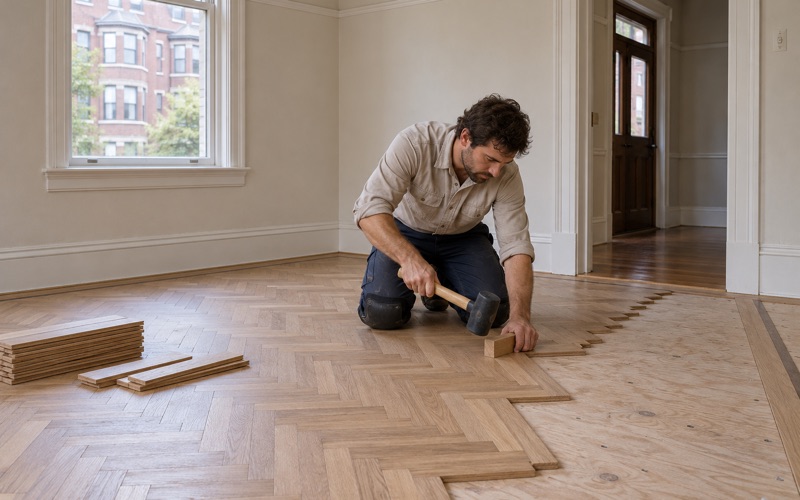
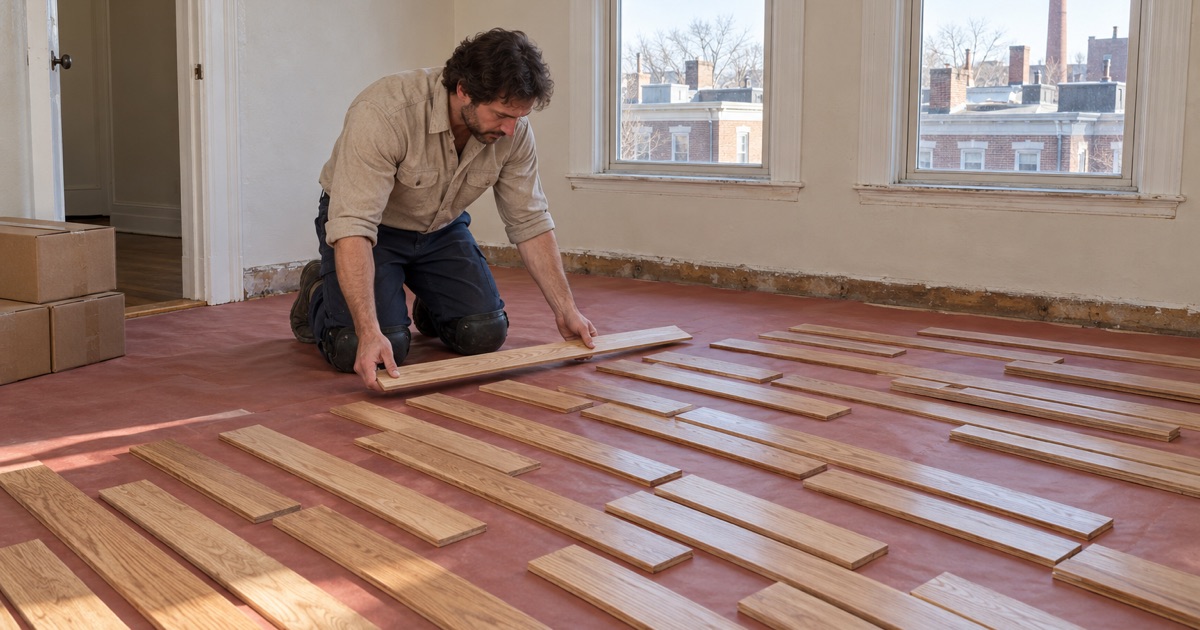
Pet urine that sits in oak turns gray, then black, and often soaks through the boards into the subfloor, where the odor lives. Sanding cannot lift a black stain that deep. We cut out the stained boards, check and seal or replace the subfloor beneath, and weave in matching wood so the repair blends in.
Powderpost Beetle and Old House Borer Damage
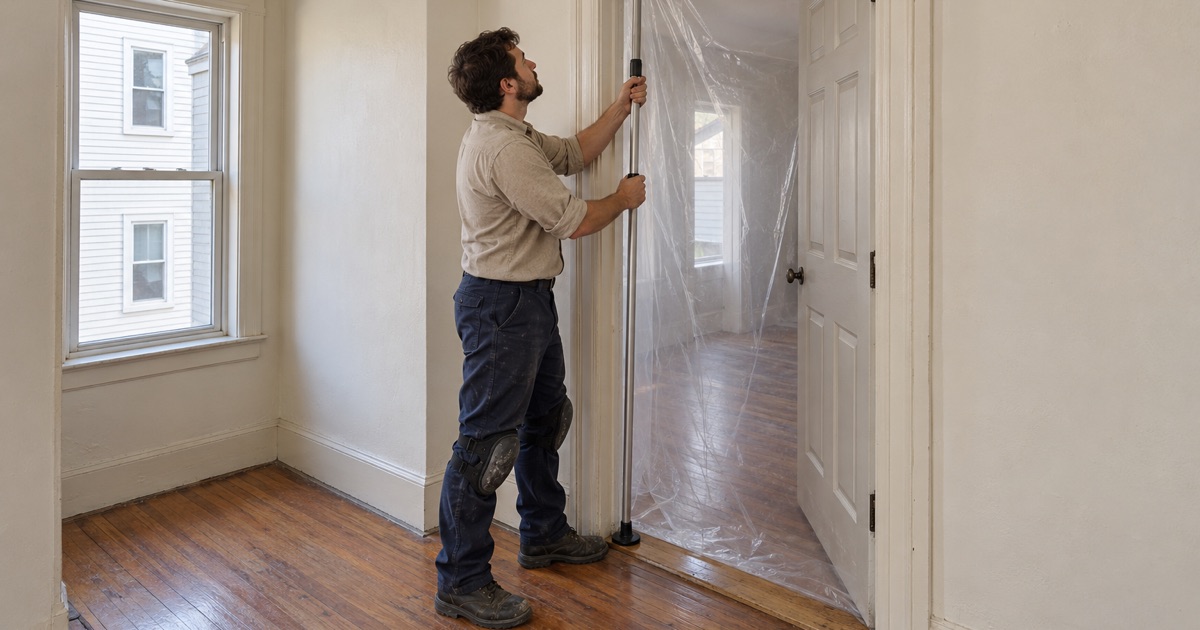
Small round exit holes and fine powdery frass on a floor or joist point to wood-boring insects such as powderpost beetle or old house borer, while carpenter ants leave coarser shavings near damp wood. We identify which you have, replace damaged boards, and tell you when the job needs a pest professional before any refinishing makes sense.
Peeling Polyurethane Over Old Wax
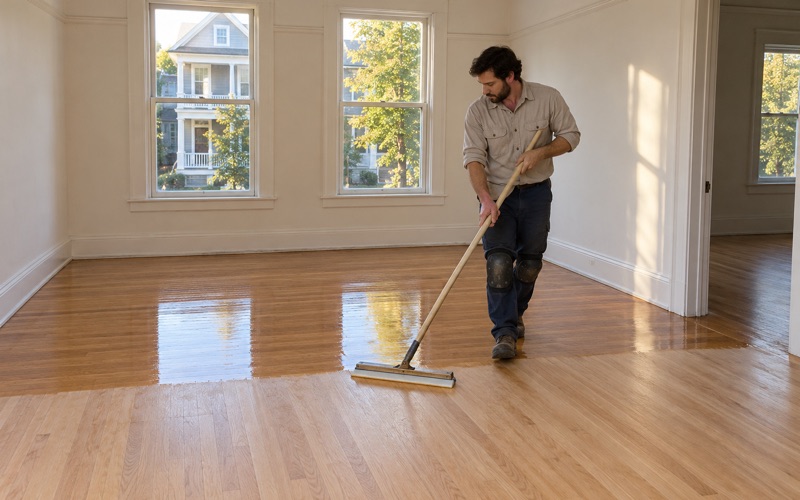
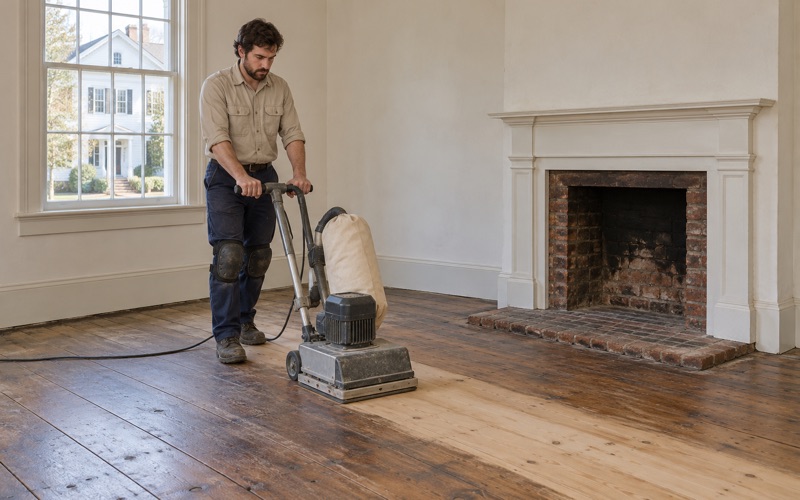
Many older floors were waxed for decades, and wax residue stops modern finishes from bonding. A new coat of polyurethane laid over it peels in sheets within months. We test for wax before quoting, and the fix is sanding to clean, bare wood rather than another coat on top.
Orange Oak and Pink Red Oak
Years of oil-based finish turn oak a deep orange, and some red oak boards show a pink cast once sanded bare. Neither is a defect, but both change how stain reads. We sand off the old amber finish and lay test samples so you can choose a neutral, warm or darker tone with the pink accounted for.
Traffic Lanes Worn Through the Finish
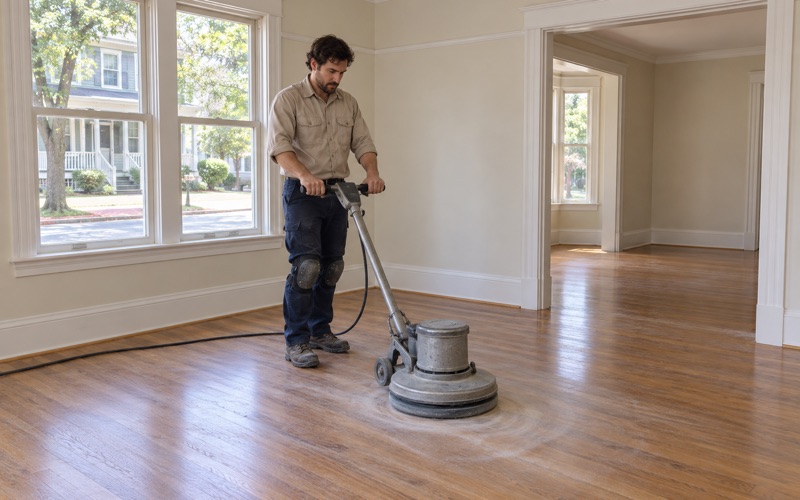
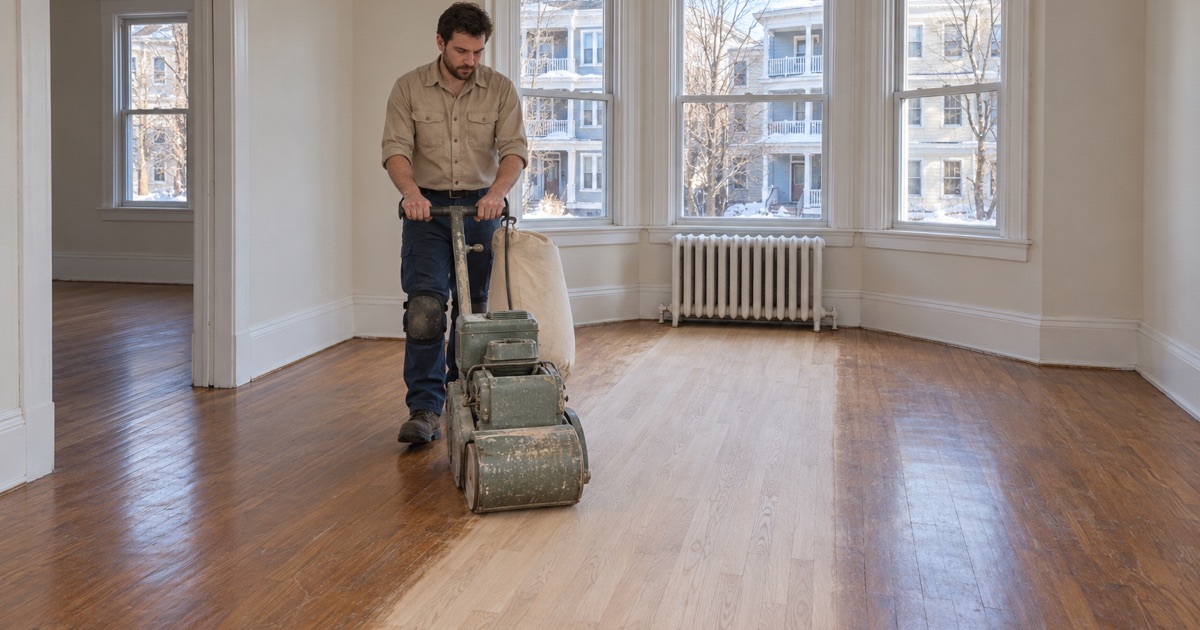
Traffic lanes are the gray paths worn through the finish in hallways, kitchens and front rooms where everyone walks. Once the wood itself is exposed it absorbs dirt and water. A screen and recoat cannot restore color there, so worn lanes generally mean sanding the room to an even surface and refinishing it in one piece.
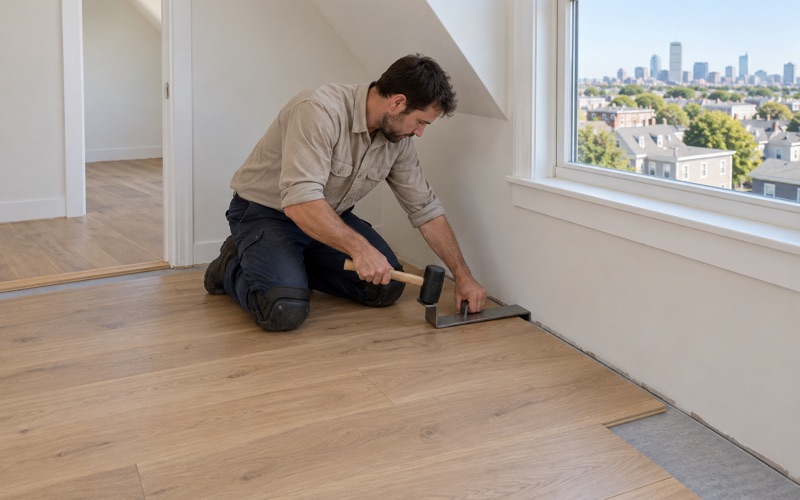
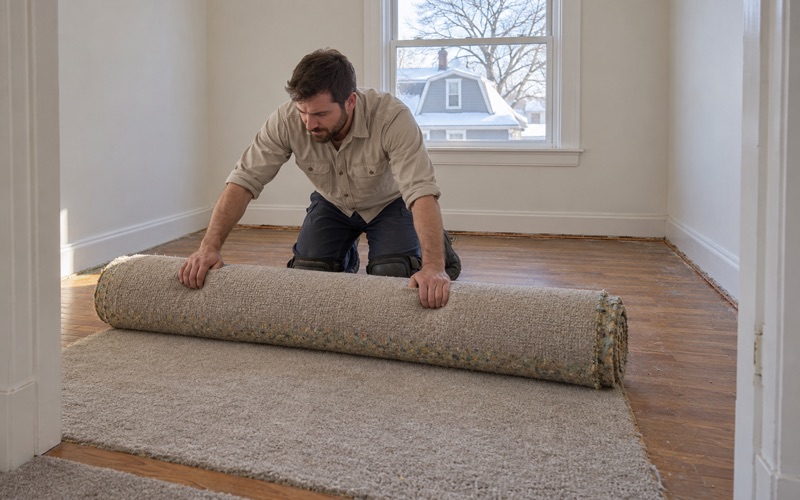
Old wood floors in a stacked building transmit footsteps and dropped objects straight to the unit beneath. When we replace or install flooring, we can add a sound-reducing underlayment rated for the job and check the condo or building rules on it. On an existing floor, rugs and pads in the right rooms help more than most expect.