Somerville Wood Flooring does pine floor refinishing in Somerville, MA, serving surrounding cities including Cambridge, Charlestown, Medford, Everett, Back Bay. Over 20+ years in the area’s older houses, we have refinished a great many softwood floors: eastern white pine in kitchens, back halls and upper floors, the occasional heart pine, and Douglas fir in some later houses and porches.
Pine is not oak, and the biggest mistake with it is treating it as if it were. It is soft, it gouges under coarse paper, its cut nails stand proud of the surface, and its wide boards move a lot with the seasons. We sand it differently, prepare it more carefully, and choose finishes that respect its warm color rather than fighting it.
The result is worth the care. A well-refinished pine floor has a glow and a character that a new floor cannot copy, and keeping it means keeping part of what makes an old house feel like one.
Old Pine and Softwood Floors
Eastern White Pine
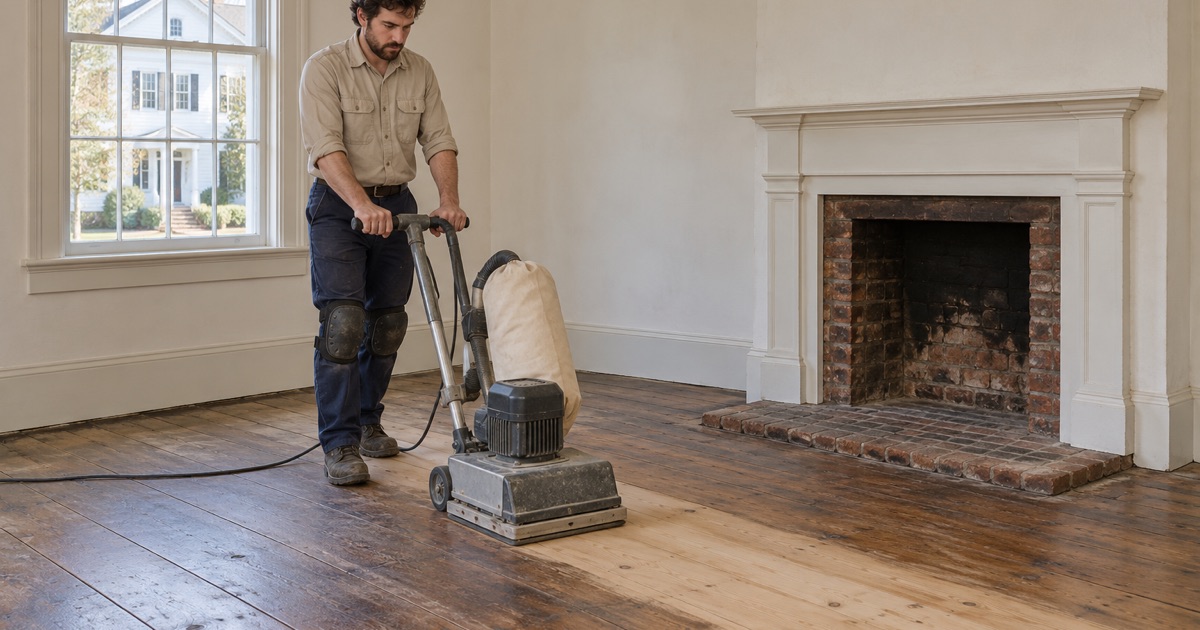
Eastern white pine is the softwood most often found in older New England houses, in wide boards in some rooms and narrower ones in others. It is soft enough to dent under a dropped pan, and it has usually picked up a century of marks, stains and patina. We aim to clean it up without sanding the character away.
Because it is soft, eastern white pine loses wood quickly under a sander. We check how much is left above the tongue, or above the nails on face-nailed boards, before deciding how far each room can be cut.
Heart Pine
Heart pine is the dense, resinous heartwood of old longleaf pine, much harder than white pine and deep red-orange in color. It turns up less often, usually in better rooms or older houses, and is prized for its grain. It sands more like a hardwood but loads sanding paper with resin, so we change paper often and keep the machine moving.
Douglas Fir
Douglas fir appears in some porches, back rooms and later houses. It has strong grain contrast between soft and hard bands, which means sanding can leave the soft bands dished if pushed too hard. We sand with a light touch and finish with a product that does not exaggerate the stripes. On porches and enclosed sunrooms, fir has often weathered or been painted, so we test what is underneath before quoting a clear finish.
Preparing a Pine Floor for Sanding
Setting Cut Nails and Face Nails
Old pine floors are often face-nailed with cut nails, square-headed nails driven through the top of the board. Over decades they work loose and stand proud. A sander that hits one tears its paper and can throw sparks, so we set every nail below the surface before sanding begins, and replace any that will not hold.
Walking the whole floor with a nail set is slow work, but it is the step that decides whether the sanding goes smoothly. We also pull old carpet staples and tack strip nails that are often left behind.
Gaps, Splinters and Loose Boards
Wide pine boards shrink in the dry heating season and open winter gaps between them. Gaps that close in summer are normal and left alone. Gaps that stay open year-round can be filled with thin strips of pine glued to one side, which moves with the floor rather than cracking out. Splintered board edges are glued down, and loose boards are re-fastened before sanding.
Paint, Lead and Old Finishes
Pine floors were very often painted, especially in kitchens, back stairs and upper rooms, and old paint may contain lead. Massachusetts runs its own lead-safe renovation rules under 454 CMR 22.00, so we check the build year and every painted surface before sanding and set up containment to suit. Old shellac and wax finishes are tested too, because they affect how the new finish will bond.
Sanding Pine Without Damaging It
A Gentler Grit Sequence
Coarse paper that suits oak tears into pine, leaving deep scratches and gouges. We start with a less aggressive grit where the floor allows and step through the sequence carefully, so the scratch pattern from each grit is fully removed by the next before finish goes on.
Avoiding Chatter and Dishing
On softwood, a drum sander held too long in one place dishes the floor and can leave chatter marks, a washboard pattern across the boards. We keep the machine moving, adjust pressure for the wood, and finish with an orbital sander to even out the surface.
Keeping the Patina
Some owners want their pine to look new; others want to keep some of its age. We can sand just enough to clean the surface and leave the deeper color, or take it further. Either way, we agree on the look before we start, usually by sanding a small test area so you can see how much color comes off with each pass.
Finishing Pine
Finish Choices and Color
Oil-modified polyurethane brings out the amber warmth of old pine. Waterborne polyurethane keeps it lighter, dries quickly, has less odor and fits the Massachusetts VOC limits for wood coatings. Hardwax oil gives a soft, natural look and makes small repairs easy later.
Stain on Pine
Pine takes stain unevenly, so darker stains can look blotchy. We test stain and sheen samples on your own floor, often with a conditioner, and frequently recommend a clear finish that lets the wood speak for itself.
Living With a Soft Floor
Pine will mark with use, and that is part of its charm. Felt pads, entry mats and rugs in high-traffic areas slow the wear, and a screen and recoat every few years keeps the finish healthy without sanding away more of the wood.
- 20+ Years With Wood Floors
- Written Itemized Estimates
- Free Estimates